IRP Discoveries

Tracing the Path From Inflamed Skin to Heart Disease

Five Questions with Dr. Nehal Mehta

psoriasis skin rash on hand

Most Americans know someone who has been affected by heart disease. Despite its status as the leading cause of death in the U.S. today, rates of heart disease have actually been steadily falling since they hit their peak in 1968. In fact, between 1970 and 2005, the life expectancy of the average American increased over 70 percent due in part to reductions in heart disease-related deaths.

Research conducted by IRP scientists has played a key role in curbing the heart disease epidemic by helping identify now well-known risk factors for heart disease, such as high blood pressure, obesity, and physical inactivity. However, not all risk factors are so commonly known. A 2017 study by IRP Lasker Clinical Research Scholar Nehal Mehta, M.D., M.S.C.E., revealed that untreated psoriasis — a chronic, relapsing, inflammatory skin disease — is linked to an elevated risk for premature coronary artery disease. Dr. Mehta’s research demonstrated a strong link between psoriasis-induced skin inflammation and and inflammation of the blood vessels, a precursor to heart disease. Through this study, the largest ongoing study of individuals with psoriasis to-date, Dr. Mehta’s team has concluded that controlling psoriasis-associated skin disease could be an important means of reducing cardiac risk in this population.

A New Approach to Fighting the Flu

Six Questions With Dr. Matthew Memoli

person receiving a flu shot

We all know flu season as the time of year where people are loading up on hand sanitizer and heading to the doctor for their flu shot. However, many underestimate the severity of the flu. During a typical flu season, five to twenty percent of Americans fall ill, leading to more than 200,000 hospitalizations and 36,000 deaths. Because of this serious threat to the public, the IRP has a long track record of researching vaccines, antivirals, diagnostics, and other resources in an effort to prevent individuals from catching the flu and improve care for those who do.

Rare Disease Research Reveals Why Immune Cells Go Wild

Discovery Could Improve Therapy for Multiple Autoimmune Diseases

neutrophil extracellular traps (NETs)

Hiding among YouTube’s vast collection of cooking demos and funny cat videos are clips of patients and their advocates designed to raise awareness of specific diseases. It was just such a video that led IRP Senior Investigator Peter Grayson, M.D., M.Sc., to begin studying an extremely rare illness called deficiency of adenosine deaminase 2, or DADA2 for short. The recently published findings of that research could help improve treatment not just for patients with DADA2 but also many more individuals with similar ailments.

Stress-Relieving Chemical Could Combat Alcohol Use Disorder

Targeting Brain’s Stress Circuitry Curbs Rats’ Alcohol Consumption

chemical structure of the oxytocin molecule

For social drinkers, alcohol brings to mind barbecues and bar-hopping with friends, but for the roughly 16 million Americans with alcohol use disorder (AUD), drinking is a source of significant stress. Unfortunately, those negative emotions — particularly those experienced during withdrawal — drive people with AUD to drink even more. A recent IRP study points to a potential way to curb the desire to drink in people who abuse alcohol by altering the behavior of a brain structure that governs negative emotions.

Mirror Therapy Alters Brain Response in Phantom Limb Patients

Neuroimaging Could Help Tailor Treatment for Amputees

amputee with prosthetic leg

Our brains frequently cause us to perceive things that are not real, from high-pitched ringing in an empty room to dancing spots in our vision after staring at a bright light. Even more strangely, people with phantom limb syndrome feel sensations, including pain, in arms and legs that they no longer have. New IRP research into the brain mechanisms underlying phantom limb pain could help hone treatment for individuals living with the condition.

On the Cusp of Customized Concussion Care

Five Questions With Dr. Jessica Gill

football players

Each year, millions of Americans suffer sports-related concussions, and the number of youth suffering from these traumatic brain injuries has been rising. Blows to the head are common in sports such as football and hockey, and when these forces are strong enough to cause a concussion, they can harm the brain and impair cognitive functioning. Although concussions occur in staggering numbers, scientists do not fully understand what happens to the brain at the time of concussion or during the recovery period. However, that doesn’t mean they’re not trying.

A Friendly Bet Turned Major Scientific Discovery

IRP Investigator Bevil Conway Discusses the Science Behind the Headlines

pitch processing in the brain

What started as a friendly bet between investigators soon produced a major scientific discovery that calls into question the long-standing notion that non-human primates serve as accurate models for the way human brains function. The study, conducted by IRP investigator Bevil Conway, Ph.D., made headlines recently with reports in outlets such as NPR and U.S. News and World Report. We’re going Behind the Headlines with Dr. Conway to dive deeper into the story, understand the significance of his findings, and see where his work could lead.

Scientific Detour Advances Understanding of Fatty Liver Disease

IRP Study Suggests a Way to Prevent Unhealthy Fat Buildup

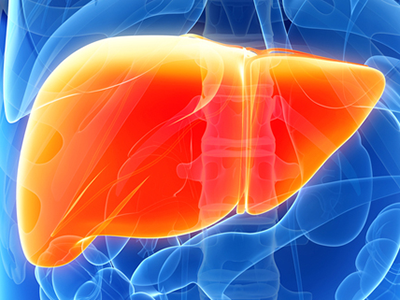
liver

Many important scientific discoveries happen when a scientist stumbles across something curious and decides to investigate further. Alexander Fleming, for example, famously discovered penicillin by examining mold that grew in one of his petri dishes while he was away on vacation. A recent IRP study spurred by a similarly unexpected observation could eventually lead to a method of preventing or reversing unhealthy amounts of fat storage in the liver.

HIV Research Yields an Unexpected Discovery

A Conversation with Dr. Paolo Lusso

Dr. Paolo Lusso

First discovered in 1981, human immunodeficiency virus, or HIV, caused one of the most deadly and persistent epidemics in history. HIV destroys CD4+ T cells, a type of white blood cell essential for fighting infection. In doing so, HIV destroys the body’s ability to fight off disease, which often leads to life-threatening consequences. 

Today, medications have allowed people living with HIV to lead healthier lives. However, HIV still remains a major public health concern and continues to be studied by researchers within the IRP and beyond.

IRP research has produced findings essential to the development of current HIV treatments and tools for diagnosis. However, there is still a lot left to learn. One recent IRP contribution to HIV research was a 2017 study led by IRP senior investigator Paolo Lusso, M.D., Ph.D., which suggests that treatments targeting a protein called integrin α4β7 could potentially become an addition to current treatment options for those with HIV, or provide new measures to prevent infection.

Non-Toxic Drug Could Increase Availability of Organ Transplants

Treatment Regimen Allows Genetically Mismatched Skin Grafts in Mice

surgeons performing an organ transplant

Thousands of patients who need an organ transplant die each year before a donor can be found. A new IRP study has identified a safer way to prevent a transplant recipient’s body from attacking a genetically dissimilar donor organ, which could dramatically expand the pool of potential organ donors.