Devon Valera is a Pathways Intern in the Office of NIH History and Stetten Museum, where she works closely with the curator and collections manager to maintain, preserve, and interpret the biomedical object collection. She is currently a master’s candidate in the George Washington University Museum Studies graduate program, where she specializes in collections management.
NIH Archives Document the Tremendous Importance of Female Scientists
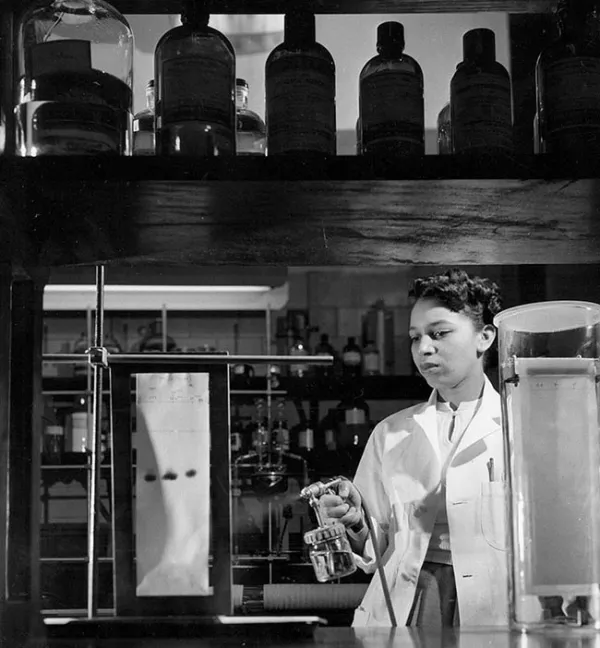
Women’s History Month is celebrated every March, and women scientists have undoubtedly made invaluable contributions to IRP research over the course of NIH’s history. Despite this, women still remain under-represented in biomedical science at NIH and elsewhere today, prompting the IRP to make supporting the careers of female researchers an important priority. While NIH works to rectify the gender imbalance in scientific research, it’s important to take time to celebrate the many women who, even when confronted with significant historical obstacles, have made a name for themselves in the lab and on the pages of scientific journals. Join me in taking a look through the archives of the Office of NIH History & Stetten Museum to learn about some of the many women scientists who have been at the forefront of science and administration at NIH.
Diversity is a cornerstone of innovation and scientific discovery. Through initiatives like its Distinguished Scholars Program and the Independent Research Scholars Program, the IRP hopes to recruit more scientists from groups historically under-represented in biomedical research, including African American and other Black researchers. As the IRP works towards a more diverse future, let’s celebrate Black History Month by delving into the archives of the Office of NIH History and Stetten Museum to learn about some of the Black scientists who have made important contributions to an array of IRP discoveries.
Museum Collection Contains Many Eye-Catching Objects and Photographs
Anyone who has engaged in a marathon of gruesome Halloween movies knows that the human body can be portrayed in ways that are frightening. Even in real life, the tools and techniques researchers use to understand disease may seem like something out of a work of fiction. In honor of Halloween this year, let’s sneak inside the archives of the Office of NIH History & Stetten Museum to see the spookiest nooks and crannies of our collection. Whatever you do, don’t turn out the lights!
Measuring and Manipulating Temperature Is Key to IRP Research
Many parts of the country were hit by record-breaking heat this summer. Controlling temperature is not only important for staying healthy, but it's also crucial for many types of research. Grab your water bottle and sit down in a shady spot to take a look at some photos from the Office of NIH History & Stetten Museum on the theme of hot and cold.
NIH History Office Highlights Contributions of Black Employees
Every February, we celebrate Black History Month to spotlight the huge contributions Black Americans have made to our nation’s culture, as well as commemorate their ongoing fight for fair treatment under the law. Just as Black individuals have had tremendous influence on the U.S. as a whole, they have also achieved great things at NIH, demonstrating the critical importance of diversity within the scientific community.
In honor of Black History Month, we’re highlighting people and programs that championed diversity at NIH. Read on to learn about just a few examples of how diversity has evolved at NIH and how Black employees have helped advance its mission.
This page was last updated on Wednesday, March 15, 2023