NIH History

NIH Mourns the Passing of John Gallin

Dr. John Gallin

NIH Director Monica M. Bertagnolli, M.D., offered the following tribute to Dr. John I. Gallin, M.D., upon hearing of his passing on Thursday, October 10, 2024.

It is with a heavy heart that I share that John I. Gallin, M.D., the 10th and longest-serving director of the NIH Clinical Center, died at his home today of multiple myeloma at the age of 81 with his wife Elaine Gallin, Ph.D., by his side.

John’s illustrious career at NIH spanned more than 50 years, but he will be most remembered for leading NIH’s research hospital for 23 years from 1994-2017. He often said that his time at the NIH Clinical Center, which he referred to as the “House of Hope,” was his most special because of the hospital’s partnership with patients to improve health through clinical research. He developed the hospital’s research portfolio, created the Patient Advisory Group, established the Department of Bioethics, and was instrumental in the creation of the Edmond J. Safra Family Lodge for adult patients and their families, a complement to The Children’s Inn. He also led efforts to build the addition to the hospital, the Mark O. Hatfield Clinical Research Center, which opened to patients in 2005. He started the Bench-to-Bedside Awards to integrate the work of basic and clinical investigators. His years of work led to the NIH Clinical Center receiving the 2011 Lasker-Bloomberg Public Service Award.

NIH Remembers Research Pioneer Gary Felsenfeld

Dr. Gary Felsenfeld

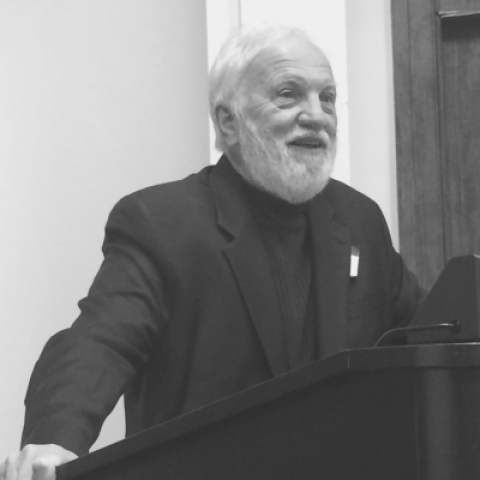
“To focus on an experiment and to shut out everything else is one of the great pleasures,” said NIH distinguished investigator Dr. Gary Felsenfeld in his 2020 oral history. 

During his more than 60 years at the National Institute of Diabetes and Digestive and Kidney Diseases (NIDDK), Felsenfeld’s keen focus and enthusiasm for science never flagged. His long career was marked by monumental, lasting breakthroughs that transformed the field of molecular biology, particularly in relation to chromatin — the complex mixture of DNA and proteins that form chromosomes inside the nucleus of a cell.

Felsenfeld died on May 1 at age 94.

NIH Mourns the Passing of Dilys Parry

Dr. Dilys Parry

Dr. Dilys Parry died peacefully in her sleep in the early morning of February 2, 2024, after a long illness. For 30 years, Dr. Parry was a staff clinician and principal investigator in the Division of Cancer Epidemiology and Genetics (DCEG) at NIH's National Cancer Institute (NCI). Following her retirement from federal service in 2007 she continued to engage with her colleagues on projects as a special volunteer. 

Dr. Parry’s medical genetics research focused primarily on genetic and clinical studies of neurofibromatosis 2 (NF2) and chordoma, a rare bone tumor derived from the notochord, and adult brain tumors. She was deeply committed to educating patients about the natural history of these diseases and helping them and at-risk relatives receive genetic testing or other types of screening to aid in early detection and treatment. Her research helped to identify susceptibility genes for and delineate the spectrum of clinical manifestations associated with NF2 and chordoma. She also elucidated correlations between the specific types of variants in the gene NF2 and clinical findings. Much of the momentum that exists in chordoma research traces back to Dr. Parry’s early interest in the disease.

A History of NIH in 12 Objects

Lecture Explains Trinkets’ Links to Important Milestones

watch fob

The history of NIH and its precursor institution, the Hygienic Laboratory, stretches back nearly 140 years — way longer than any human being has ever lived. Even when those who have witnessed history are still around, the fading of memories threatens to erase our knowledge of the past. Fortunately, with proper storage and care, objects like those in the collections of the Office of NIH History and Stetten Museum can last hundreds of years, providing enduring reminders of important historical milestones.

On December 11, Stetten Museum curator Michele Lyons used a dozen such objects to describe the evolution of NIH from its origins to the modern day. Her presentation touched on topics ranging from NIH’s founding in New York to its key role in creating national standards for heart valve replacement surgery to the American AIDS crisis of the 1980s and 1990s.

NIH Mourns the Passing of S. Perwez Hussain

Dr. S. Perwez Hussain

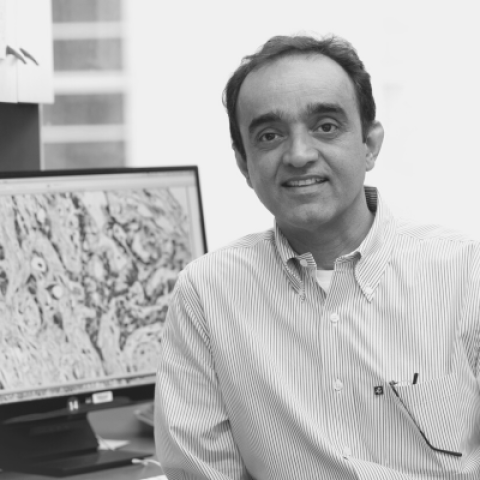
The IRP community is profoundly saddened by the passing of S. Perwez Hussain, Ph.D., Senior Investigator in the Laboratory of Human Carcinogenesis at the National Cancer Institute (NCI). He died on November 24, 2023, after living with stage 4 colon cancer for many years.

For over 25 years, Perwez led translational research that could be brought into clinical trials for patients with pancreatic cancer and he established the pancreatic cancer research program in the Laboratory of Human Carcinogenesis. He was known as an exceptional scientist, caring mentor, kind colleague and friend to many.

IRP Research Yields Life-Changing Treatments

Highlighting Drugs and Vaccines Stemming from NIH Discoveries

syringe and vials of medicine

On May 3, more than six decades of IRP research culminated in the U.S. Food and Drug Administration (FDA) approving the world’s first vaccine for respiratory syncytial virus (RSV), a disease that puts tens of thousands of Americans in the hospital each year and kills thousands. While the new vaccine, called Arexy, has been getting all the headlines recently, it is only the latest example of a slew of FDA-approved medications and vaccines that might never have existed without the tireless efforts of scientists at NIH.

Indeed, a recently published study led by Mark Rohrbaugh, Ph.D., J.D., a special advisor in the NIH Office of Science Policy, found that inventions developed at NIH have contributed to more FDA-approved products than those created at any other nonprofit research institution in the world over the past five decades. NIH tops the study’s list with 27 FDA-approved products, six more than the study attributed to the combined efforts of all the schools in the University of California system.

NIH Mourns the Passing of W. Michael Kuehl

Dr. W. Michael Kuehl

The IRP community mourns the recent passing of our colleague W. Michael Kuehl, M.D., former senior investigator in the Genetics Branch at the National Cancer Institute (NCI), after a long struggle with renal cancer.

In his more than 30 years at NCI, Michael was devoted to understanding the cellular and molecular biology of multiple myeloma (MM) and pre-malignant MGUS (monoclonal gammopathy of uncertain significance), a precursor of the disease. He identified multiple mechanisms of molecular pathogenesis in MM and he linked pre-malignant MGUS to MM, which is relevant for the early diagnosis and treatment of MM.

NIH Mourns the Passing of Dr. Herbert M. Geller

Dr. Herb Geller

The IRP community is saddened by the recent passing of our esteemed colleague, Herb Geller, Ph.D., who died April 16, 2023, at the NIH Clinical Center from complications of advanced prostate cancer. He is survived by his wife of 55 years, Nancy Geller, Ph.D., who is the Director of the Office of Biostatistics Research at the National Heart, Lung, and Blood Institute (NHLBI).

Dr. Geller joined the National Institutes of Health in 2001, where he became the Chief of the Developmental Neurobiology Laboratory in the Cell and Developmental Biology Center at NHLBI. During his long and successful career in neurobiology, Dr. Geller made a significant impact on the field of neuroscience. His laboratory focuses on understanding the role of the extracellular matrix — the intricate network of molecules that surround cells which control migration, pathfinding, and growth of neurons during brain development.

A Look Back at the IRP’s History-Making Women

NIH Archives Document the Tremendous Importance of Female Scientists

two female technicians working in the lab

Women’s History Month is celebrated every March, and women scientists have undoubtedly made invaluable contributions to IRP research over the course of NIH’s history. Despite this, women still remain under-represented in biomedical science at NIH and elsewhere today, prompting the IRP to make supporting the careers of female researchers an important priority. While NIH works to rectify the gender imbalance in scientific research, it’s important to take time to celebrate the many women who, even when confronted with significant historical obstacles, have made a name for themselves in the lab and on the pages of scientific journals. Join me in taking a look through the archives of the Office of NIH History & Stetten Museum to learn about some of the many women scientists who have been at the forefront of science and administration at NIH.

Celebrating Black Scientists’ Contributions to IRP Research

NIH’s Historical Archives Highlight Numerous Prominent Scientists

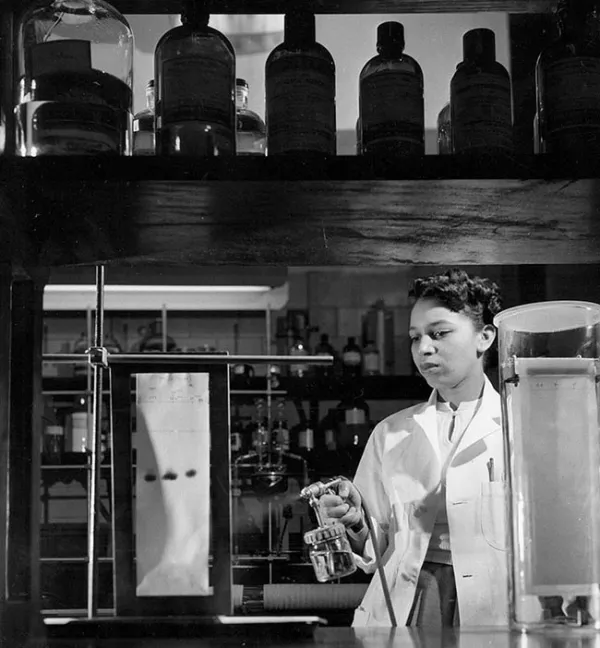
Dr. Alma LeVant Hayden working in the lab

Diversity is a cornerstone of innovation and scientific discovery. Through initiatives like its Distinguished Scholars Program and the Independent Research Scholars Program, the IRP hopes to recruit more scientists from groups historically under-represented in biomedical research, including African American and other Black researchers. As the IRP works towards a more diverse future, let’s celebrate Black History Month by delving into the archives of the Office of NIH History and Stetten Museum to learn about some of the Black scientists who have made important contributions to an array of IRP discoveries.