NIH History

NIH Mourns Two Accomplished Cancer Researchers

A Tribute to Drs. James M. Phang and John J. DiGiovanna
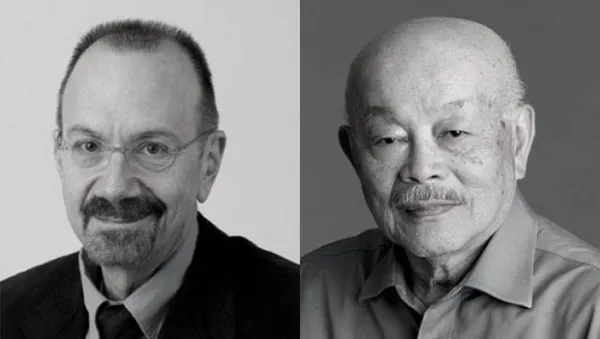
Dr. John J. DiGiovanna (left) and Dr. James M. Phang (right)

The IRP is deeply saddened by the recent passing of two members of its community, James "Jim" M. Phang, M.D., and John J. DiGiovanna, M.D. Dr. Phang passed away on January 29 after a months-long struggle with esophageal cancer. Dr. DiGiovanna died on February 6, more than two years after his diagnosis of metastatic pancreatic cancer.

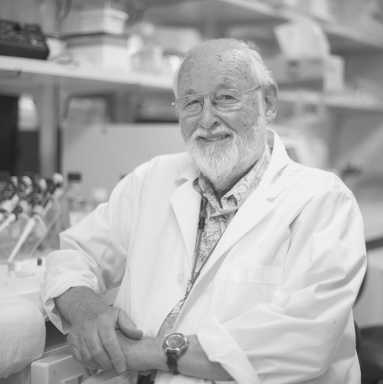
NIH Mourns the Passing of Ji Ming Wang

Dr. Ji Ming Wang

The IRP community is profoundly saddened by the recent passing of Ji Ming Wang, M.D., Ph.D., Senior Investigator and Head of the Chemoattractant Receptor and Signal Section in the Cancer Innovation Laboratory at NIH's National Cancer Institute (NCI). He died unexpectedly on December 24, 2022.

Dr. Wang studied the role of chemoattractant receptors in infection, inflammation, immune responses and cancer progression for over 30 years. In 1998, Ji Ming was the first to identify a critical role for the receptors in mediating cancer cell metastasis to distant organs. His later work focused on leukocyte infiltration, a hallmark of inflammation and cancer progression.

NIH History Shows Off Its Spooky Side

Museum Collection Contains Many Eye-Catching Objects and Photographs

Anyone who has engaged in a marathon of gruesome Halloween movies knows that the human body can be portrayed in ways that are frightening. Even in real life, the tools and techniques researchers use to understand disease may seem like something out of a work of fiction. In honor of Halloween this year, let’s sneak inside the archives of the Office of NIH History & Stetten Museum to see the spookiest nooks and crannies of our collection. Whatever you do, don’t turn out the lights!

model of the muscles and blood vessels in the head

Beat the Heat With Some NIH History

Measuring and Manipulating Temperature Is Key to IRP Research

Many parts of the country were hit by record-breaking heat this summer. Controlling temperature is not only important for staying healthy, but it's also crucial for many types of research. Grab your water bottle and sit down in a shady spot to take a look at some photos from the Office of NIH History & Stetten Museum on the theme of hot and cold.

nurse holding thermometer

NIH Mourns the Passing of Joost J. Oppenheim

Joost J. Oppenheim, M.D.

The IRP community is profoundly saddened by the recent passing of Joost “Joe” Oppenheim, M.D., Senior Investigator and Head of the Cellular Immunology Section in the Cancer Innovation Laboratory at NIH‘s National Cancer Institute (NCI). He died on May 14, 2022, at the age of 87.

Dr. Oppenheim was engaged in cellular immunology research at NIH for five decades and was instrumental in the discovery of cytokines, chemokines, and alarmins, which are substances produced by immune cells that enable them to communicate and act as ‘first responders” to injury or infection.

Celebrating Black History at NIH

NIH History Office Highlights Contributions of Black Employees

scientists Clara Hall (left) and Dr. Elizabeth Neufeld (right) working in the lab

Every February, we celebrate Black History Month to spotlight the huge contributions Black Americans have made to our nation’s culture, as well as commemorate their ongoing fight for fair treatment under the law. Just as Black individuals have had tremendous influence on the U.S. as a whole, they have also achieved great things at NIH, demonstrating the critical importance of diversity within the scientific community.

In honor of Black History Month, we’re highlighting people and programs that championed diversity at NIH. Read on to learn about just a few examples of how diversity has evolved at NIH and how Black employees have helped advance its mission.

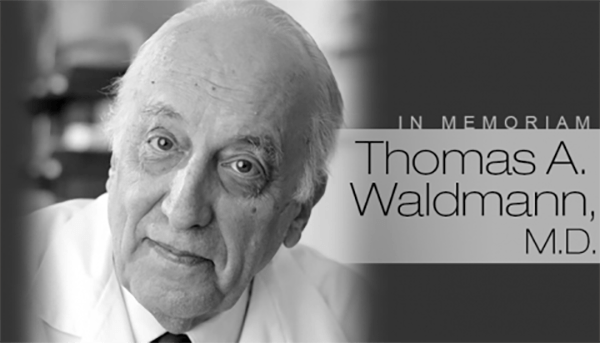
NIH Mourns the Passing of Thomas A. Waldmann

Dr. Thomas A. Waldmann

The NIH community is profoundly saddened by the recent passing of Thomas A. Waldmann, M.D., Chief Emeritus of the Lymphoid Malignancies Branch and NIH Distinguished Investigator.

Considered a giant in the field, Tom was a renowned immunologist whose more than 60-year career at the National Cancer Institute led to numerous high-impact discoveries that advanced the fields of organ transplantation, autoimmune disease and cancer. He was a leader in the study of cytokines and their receptors and of monoclonal antibodies, now a dominant form of cancer immunotherapy.

Global Scientists Come Together at the National Institutes of Health

Individuals From Around the World Drive IRP Breakthroughs

Dr. Flossie Wong-Staal

Come to NIH and you’ll hear many accents. Scientists from around the world have always contributed significantly to the NIH mission. The resulting diversity of backgrounds and perspectives makes the NIH Intramural Research Program an extremely stimulating and productive environment. Read on to learn about some of the many scientists of the past and present who brought their talents from abroad to one of the world’s leading institutions for biomedical research.

NIH Mourns the Passing of George Patterson

Dr. George Harold Patterson

George Harold Patterson, a senior investigator and chief of the Section on Biophotonics at NIH’s National Institute of Biomedical Imaging and Bioengineering (NIBIB), died of complications from pancreatic cancer on June 20, 2021. He was only 50 years old, recently tenured, with a wife, two small children, and a promising career before him. We are just so sad about the loss of this warm friend and brilliant and creative scientist taken away far too soon.

George's research focused on the development of probes and techniques for diffraction-limited and sub-diffraction-limited fluorescence imaging of cells and tissues. Indeed, as a staff scientist in the NIH lab of Jennifer Lippincott-Schwartz, George worked intimately with Eric Betzig in the development of the nanometer-level resolution techniques that earned Eric a Nobel Prize in 2014.

Looking Back at a Pandemic Year

Photos Document NIH Response to COVID-19

walk-up COVID-19 testing stations at the at the National Institute of Environmental Health Sciences campus in North Carolina

This past January marked the one-year anniversary of NIH’s role in addressing COVID-19. For many, it has been a year of hardships and grief, but the race to subdue this new virus has also tapped into the resolve and ingenuity of IRP staff who have already helped create diagnostic tests, vaccines, and therapeutics. Let's take a look back to see a few examples of how IRP scientists and staff have contributed to the fight against COVID-19, as well as how the pandemic has changed life at the NIH.