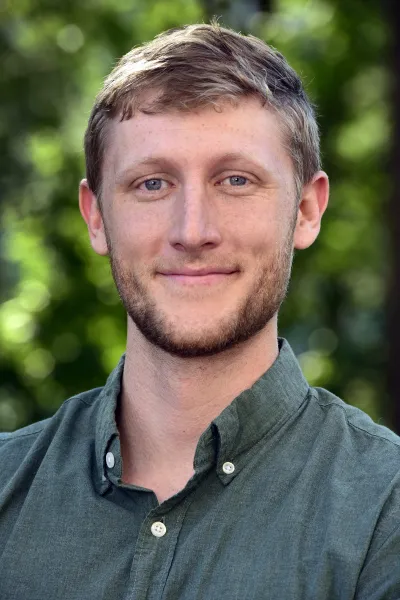
Anindita Ray, Ph.D., is a postdoctoral visiting fellow in the Neurodegenerative Disease Research Unit at NIH’s National Institute of Neurological Disorders and Stroke (NINDS), where she studies the genetics of Lewy body dementia and other dementia-related disorders. Anindita received her Ph.D. from University of Calcutta, India, during which she investigated the genetics of a rare skin condition called Birt-Hogg-Dubé syndrome at the Indian Statistical Institute. In her role as an outreach liaison for the NIH Fellows Committee (FELCOM), she writes profiles of IRP postdoctoral fellows for the “I Am Intramural” blog. Outside the lab, she can be found reading, hiking, or discovering murals in the city.
Dr. Richard Remigio Studies the Health Repercussions of Changing Environmental Conditions
Summer 2023 started off on an ominous note. On June 7th, New Yorkers woke up to a deep orange skyline over Manhattan and the Statue of Liberty, resembling a scene from a dystopian novel. Air quality indices there reached ‘code maroon,’ warning that being outdoors was dangerous even for healthy people. Americans and Europeans would subsequently endure some of the highest summer temperatures on record, and in August, wildfires devastated the Hawaiian island of Maui.
These and many other recent events have made it clear how much climate change already affects people’s lives. One of the people trying to combat those consequences is Richard Remigio, Ph.D., a postdoctoral fellow at the Occupational and Environmental Epidemiology Branch at the National Cancer Institute (NCI).
Dr. Ayland Letsinger examines the effects of exercise on the brain
Every January, gyms are flooded with new members using the beginning of a new year as a burst of motivation to get fit. When many of these new exercise enthusiasts abandon their new healthy habit within a couple months, they shouldn’t feel guilty, according to IRP postdoctoral fellow Ayland Letsinger, Ph.D. He believes there’s a genetic component behind our fluctuating interest in exercise, and he spends his days in his IRP lab investigating such biological factors behind the motivation to move.
“More people would rather binge-watch 'Stranger Things’ for three hours than do 30 minutes of moderate physical activity, and there may be a biological basis behind it,” he explains.
Dr. Tiffany Zarrella Examines Communication Between Bacteria to Combat Persistent Infections
Facebook’s nearly 3 billion users may seem like a huge social network, but it pales in comparison to the conversations among the trillions of microbes that live inside a single human body. Few people know this better than IRP postdoctoral fellow Tiffany Zarrella, Ph.D., who spends her days eavesdropping on the messages bacteria send to one another to improve treatment for stubborn infections.
Dr. Zarrella was drawn to the bacterial world in microbiology lab courses while earning a biochemistry degree at Syracuse University in New York. After graduation, she obtained a research technician position at Albany Medical College, where she worked on projects centered around infectious bacteria and how they respond to their environments. She continued this thread of research in graduate school, moving on to a new study to discover how Streptococcus pneumoniae bacteria, which often cause ear infections and pneumonia, use a particular signaling molecule to resist antibiotic treatments and evade vaccines.
Dr. Stefan Barisic Turns Laboratory Discoveries into Kidney Cancer Treatments
The Laboratory of Transplantation Immunotherapy sits at the heart of the NIH Clinical Center, just down the hallway from the Southeast inpatient unit. Here, IRP postdoctoral research fellow Stefan Barisic, M.D., labors at the bench with the goal of creating practical treatments for kidney cancer patients. Having such proximity to his patients was one of the chief attractions of working at NIH for Dr. Barisic.
“The NIH Clinical Center is an amazing place because it has all the resources you need to go from the bench to the bedside and back to the bench all in one building,” says Dr. Barisic.
This page was last updated on Wednesday, March 15, 2023