
IRP Discoveries

From Mitochondria to Behavior

Mitochondria are dynamic cellular organelles involved in ATP synthesis and in apoptotic mechanisms (programmed cell death). However, in addition to these classically known functions, recent studies at the NIH have deciphered another intriguing role for mitochondria in the development and plasticity of neurons.

Mitochondria

The Power of Vaccines Research

Long recognized as essential to global health, vaccines protect individuals and populations from contagion and the reappearance of eradicated diseases. Vaccination against deadly diseases prevents two to three million deaths worldwide every year, and there are significant economic benefits as well. In the United States, every dollar spent on the routine childhood immunization program saves society more than $16 in future costs.

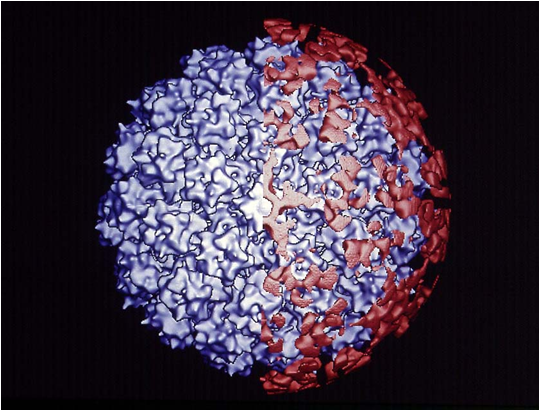
HPV vaccine molecule

How Asking a Very Basic Research Question Led Us to a Model For At Least 3 Diseases

When I started this project, it was not my objective to develop a model for any specific disease, nor did I even suspect that the ultimate result would be some insight into autoimmune disease. The basic research question I was asking was why there are sequences in the 3’ untranslated region of the interferon-gamma mRNA that are more highly conserved than the coding region of the gene.

ARE region

Ebola: Scientific Research in Search of a Public Health Solution

As the international community continues to seek collaborative approaches to contain and eradicate the current Ebola outbreak in West Africa, we are reminded that these efforts are also an investment in our own public health. Only by defeating a virus at its source can we prevent infectious diseases from spreading to other countries.

Ebola

Let There Be Light!

Optogenetics, a new technology used to control brain activity with light, has revolutionized the field of neuroscience in the past decade. The combination of two powerful tools, genetics and optics, has provided both temporal and spatial acuity in understanding how the brain works in response to sensory and motor cues in the environment. At the recent NIH Research Festival symposium titled “Optogenetic approaches to investigating the nervous system,” fellows and scientists from the NIH community presented their research encompassing topics that make use of this approach to study different systems.

Optogenetics