
research training

Out of the Clinic and Into the Lab

Visiting Medical Students Look Back on IRP Research Experience

Alex Valenzuela

When patients are affected by complex and poorly understood medical problems, it can only be an advantage when their doctors have one foot in the exam room and another in a laboratory studying the disease. However, physicians don’t accrue scientific skills on their own. Rather, they often must venture outside of their medical education to gain experience in research via programs like NIH’s Medical Research Scholars Program (MRSP).

The MRSP allows medical students from across the United States to spend a year working in IRP labs alongside seasoned scientists. The 50 medical students and one dental student selected as 2022 Medical Research Scholars recently finished their time at NIH after arriving on campus last July. Between classes, clinical rounds, study sessions, and exams, five of those young men and women found the time to describe their experience at NIH to the “I Am Intramural” blog, so read on to get a taste of what the MRSP has to offer our nation’s aspiring physicians.
IRP Scientist Shares Path From Stuttering to Science

Diversity-Focused NIH Program Helps Dr. Shahriar SheikhBahaei Investigate the Neuroscience of Voluntary Movement

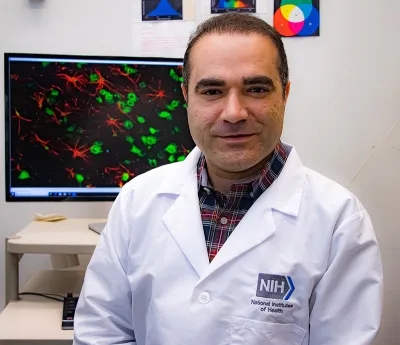
Dr. Shahriar SheikhBahaei

IRP neuroscientist Shahriar SheikhBahaei, Ph.D., first became aware of his stutter when he was 5 years old. Years later, his career would revolve around studying the biological roots of his speech impediment. But before he could start his own lab focused on how the brain controls voluntary movement, he needed a leg up from NIH’s Independent Research Scholars (IRS) program.

Poster Days Spotlight Young Researchers

Budding Scientists Showcase Research at Annual Event

Yasmin Ali

Any scientist who wants to make game-changing discoveries has to start somewhere — even Albert Einstein worked in a patent office before landing his first job in academia. Through its Postbaccalaureate IRTA program, NIH hopes to give aspiring scientists more of a leg up than Einstein had by bringing them into IRP labs after they complete their undergraduate studies.

On April 26, 27, and 28, more than 900 recent college graduates participating in the program presented at this year’s virtual Postbac Poster Days. Read on to learn about a few of these young researchers and their contributions to the groundbreaking work being done at NIH.

Postdoc Profile: COVID-19 Provides New Opportunities for Virus Science

Dr. Alberto D. López-Muñoz Pivots to New Research Focus Amidst Pandemic

Dr. Alberto D. López-Muñoz

Like all virologists, IRP postdoctoral fellow Alberto D. López-Muñoz, Ph.D., knew a global pandemic was sadly inevitable. No one could predict exactly when, but it was just a matter of time until a novel virus would make its way around the globe. Nevertheless, when the COVID-19 pandemic hit, caused by a virus called SARS-CoV-2, even Dr. López-Muñoz was surprised by how rapidly his career transformed as he switched gears study the novel contagion.

NIH Summer Interns Show Off in Poster Exhibitions

Budding Scientists Present Their Research During Three-Day Virtual Event

Deeya Garg

Although NIH’s 2021 Summer Internship Program (SIP) was fully virtual this year, that didn’t stop the hundreds of participating high school, college, and graduate students from contributing to a variety of important IRP research projects. More than 500 students who worked in NIH labs this summer presented their work during this year’s Summer Presentation Week, which took place August 3-5.

I sifted through the lengthy list of presenters at the event and spoke with a diverse group of young men and women who spent their summers expanding our knowledge of human health and biology. Read on to learn about these promising future scientists and doctors and the research they completed this summer.

Three-Minute Talks Pit Researchers Against the Clock

IRP Scientists Keep it Short and Sweet in Competition’s Final Round

timer

Science is so closely associated with long, jargon-laden lectures that scientists like Neil deGrasse Tyson and the IRP’s own Anthony Fauci have become celebrities for their ability to explain complex scientific concepts in a succinct and understandable way. On June 25, 17 postbacs, graduate students, and postdocs from across NIH showcased their own communication chops in the final round of the IRP’s annual Three-Minute Talks (TmT) competition.

Postbac Poster Day Showcases Young Scientific Talent

Scientists-in-Training Impress at Virtual Event

Malcolm Udeozor

Despite the challenges of working during a global pandemic, IRP scientists continue to make groundbreaking discoveries and mentor the next generation of researchers. This includes the hundreds of recent college graduates conducting research in NIH labs through the Postbaccalaureate IRTA program. On April 28, 29, and 30, many of these budding scientists presented the fruits of their efforts at this year’s virtual Postbac Poster Day. Read on to learn about a small sampling of the scientific strides NIH’s postbacs are making.

IRP Grad Students Present a Scientific Smorgasbord

Virtual Symposium Showcases Scientists-in-Training

IRP graduate students Khalin Nisbett, Julia Gross, Luis Rivera García, and Temesgen Andargie

Even in the midst of a global pandemic, life at NIH goes on. IRP researchers continue to run experiments, publish scientific papers, and train the next generation of scientists, including the many graduate students performing research in IRP labs through the Graduate Partnership Program. On February 17 and 18, more than 100 of these scientists-in-training presented their work virtually at the NIH’s 17th annual Graduate Student Research Symposium. Like last year’s entirely online Postbac Poster Day, the event overcame the constraints of COVID-19 precautions to showcase a broad range of research, including several studies focused on the novel coronavirus.

Postbac Poster Day Goes Virtual

Hundreds of Young Researchers Present Their Work Online

Amy Kwarteng

The COVID-19 pandemic has dramatically altered the way scientists are doing their work. Nevertheless, scientific research is a highly collaborative and interactive enterprise, so it remains essential for researchers to share and discuss their ideas and discoveries.

Every spring, the NIH’s Postbac Poster Day offers recent college graduates participating in the NIH’s Postbaccalaureate IRTA program the chance to show off the fruits of their labors and talk about their projects with both their fellow postbacs and the NIH’s many seasoned scientific veterans. Due to the need to maintain social distancing, the NIH's Office of Intramural Training and Education (OITE) went through considerable effort to move this year’s Postbac Poster Day to an online forum. The OITE staff's hard work paid off handsomely, with more than 870 postbacs presenting their research via WebEx on April 28, 29, and 30. Keep reading for a few examples of the fascinating scientific questions NIH’s latest crop of postbacs has been investigating.

NIH Research Festival Hosts Postdoc Poster-Palooza

Annual Event Highlights Contributions of IRP Postdoctoral Fellows

Dr. Subhash Verma

At lunchtime last Wednesday, the NIH Clinical Center’s FAES Terrace echoed with the joyful sounds of scientists nourishing their bodies and their brains. While those stopping by the annual NIH Research Festival poster session could be forgiven for making a beeline straight for the food — including the submissions to this year’s Scientific Directors’ baking competition — once their plates were full, they took advantage of the opportunity to satiate their scientific curiosity as well by checking out the dozens of posters on display.