
women's history

A Look Back at the IRP’s History-Making Women

NIH Archives Document the Tremendous Importance of Female Scientists

two female technicians working in the lab

Women’s History Month is celebrated every March, and women scientists have undoubtedly made invaluable contributions to IRP research over the course of NIH’s history. Despite this, women still remain under-represented in biomedical science at NIH and elsewhere today, prompting the IRP to make supporting the careers of female researchers an important priority. While NIH works to rectify the gender imbalance in scientific research, it’s important to take time to celebrate the many women who, even when confronted with significant historical obstacles, have made a name for themselves in the lab and on the pages of scientific journals. Join me in taking a look through the archives of the Office of NIH History & Stetten Museum to learn about some of the many women scientists who have been at the forefront of science and administration at NIH.
Celebrating Black Scientists’ Contributions to IRP Research

NIH’s Historical Archives Highlight Numerous Prominent Scientists

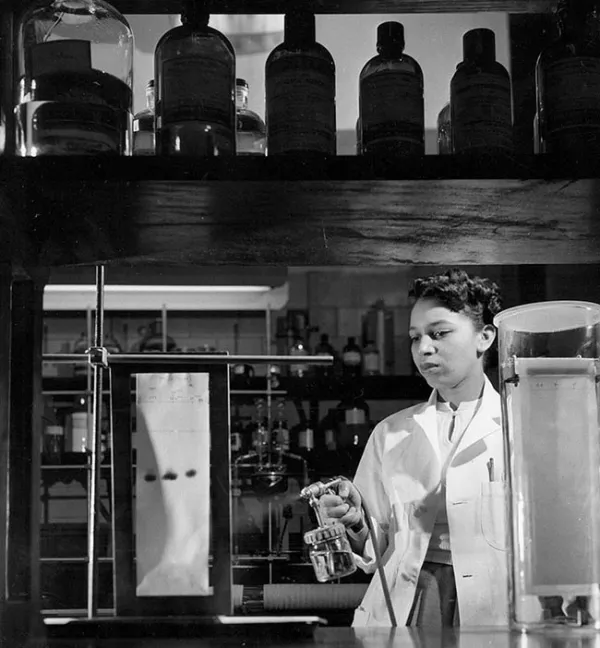
Dr. Alma LeVant Hayden working in the lab

Diversity is a cornerstone of innovation and scientific discovery. Through initiatives like its Distinguished Scholars Program and the Independent Research Scholars Program, the IRP hopes to recruit more scientists from groups historically under-represented in biomedical research, including African American and other Black researchers. As the IRP works towards a more diverse future, let’s celebrate Black History Month by delving into the archives of the Office of NIH History and Stetten Museum to learn about some of the Black scientists who have made important contributions to an array of IRP discoveries.

Celebrating NIH's History-Making Women

As Women's History month draws to a close, we’d like to introduce you to some of the IRP researchers who have received the honor of delivering the Anita B. Roberts Lecture. The Anita B. Roberts Lecture Series is organized by the NIH Women Scientist Advisors Committee to highlight outstanding research achievements by female scientists at NIH. The series is supported by the Office of Research on Women’s Health.

Dr. Anita B. Roberts

President Obama Visits Ebola Vaccine Lab as Women Make History

The Ebola vaccine developed by Dr. Nancy Sullivan at NIAID is a Women’s History Month highlight: women developed the vaccine and coordinated and led the clinical trial, and a woman was the first volunteer to receive the vaccine. “That wasn’t planned, but it’s kind of remarkable,” said Sullivan. She explained her work to President Barack Obama in person.

Sullivan with Obama

Women's History: 1930s Meningitis Research

Robert Forkish and Sara Branham

“Know your enemy” describes the work of Dr. Sarah Branham (1888-1962). She dedicated much of her career to understanding meningitis, identifying different strains, and developing the effective tests and treatments for the disease in anti-serum and sulfa drugs.

In this September 1937 photo, Branham and technician Robert Forkish inoculate a mouse with meningococcus antiserum to determine whether it will protect against meningitis: