
vaccine

Women's History: 1930s Meningitis Research

Robert Forkish and Sara Branham

“Know your enemy” describes the work of Dr. Sarah Branham (1888-1962). She dedicated much of her career to understanding meningitis, identifying different strains, and developing the effective tests and treatments for the disease in anti-serum and sulfa drugs.

In this September 1937 photo, Branham and technician Robert Forkish inoculate a mouse with meningococcus antiserum to determine whether it will protect against meningitis:
The Power of Vaccines Research

Long recognized as essential to global health, vaccines protect individuals and populations from contagion and the reappearance of eradicated diseases. Vaccination against deadly diseases prevents two to three million deaths worldwide every year, and there are significant economic benefits as well. In the United States, every dollar spent on the routine childhood immunization program saves society more than $16 in future costs.

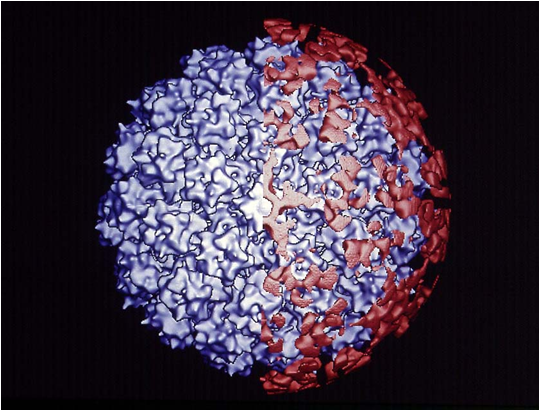
HPV vaccine molecule

Ebola: Scientific Research in Search of a Public Health Solution

As the international community continues to seek collaborative approaches to contain and eradicate the current Ebola outbreak in West Africa, we are reminded that these efforts are also an investment in our own public health. Only by defeating a virus at its source can we prevent infectious diseases from spreading to other countries.

Ebola

Explorers at the Edge of Life

The turn of the 20th century brought exponential advancements in technology and science. While intrepid explorers like Cook and Peary journeyed over the tundra and ice in search of the North Pole—at that time considered the final frontier of land exploration—the budding National Institutes of Health (NIH) was also journeying into the unknown with a charge to protect the public from organisms existing at the very edges of life.

ebola-virus-particles

Ticks Make History

Rocky Mountain wood ticks, or dermacentor andersoni, carry many diseases including Rocky Mountain spotted fever (RMSF), which can be fatal. Research on the cause, prevention, and treatment of tick-borne diseases began about 1900 at what is now the NIAID’s Rocky Mountain Laboratory (RML).

Ticks being fed