CAR-T

Symposium Spotlights Promising Female Scientists

Annual Event Recognizes Three Young Researchers’ Scientific Accomplishments

Dr. Jennifer Zink

For decades, NIH has been working to solve the problems that have long stymied the careers of many young women interested in becoming scientists. As that essential effort continues, it’s important to shine a spotlight on some of the talented female researchers who are contributing to our knowledge of human health and biology right now.

One way the IRP does that is through the annual NIH Women Scientists Advisors (WSA) Scholar Award Symposium, which each year gives three early-career female scientists working in NIH labs the opportunity to present their work to the entire IRP community. At this year’s symposium, which took place April 29, the most recent group to be named WSA Scholars by NIH’s Women Scientists Advisors committee discussed their efforts to probe pollution’s impact on health, improve immunotherapy for cancer, and examine how screen time affects kids. Read on to learn more about their award-winning research.

Alternative Therapy Relieves Immunotherapy’s Neurological Consequences

Case Studies Highlight New Way to Treat Common Side Effect

child with cancer

New medical treatments nearly always come packaged with new side effects. CAR-T cell therapy, a game-changing ‘immunotherapy’ for cancer, is no exception. However, a set of case studies reported by IRP researchers could help physicians better contend with one of the therapy’s most worrisome complications.

CAR-T cell therapy involves collecting immune cells called T cells from a patient's blood, genetically modifying them to turn them into cancer killers, growing millions of the modified cells in the lab, and then returning the cancer-seeking missiles to the patient’s body. As promising as the approach is for eliminating cancer, the first CAR-T cell therapy was approved by the U.S. Food and Drug Administration (FDA) only a bit more than six years ago, so clinicians are still figuring out the best ways to manage its less desirable effects.

The Boon of Blood

A Look Inside NIH’s Department of Transfusion Medicine

a patient receiving blood during a surgery

The essential role of blood in our bodies has been recognized as far back as the time of ancient Greece, when the Greek physician Hippocrates included it in his list of four ‘humors’ that influence our health and emotions. Since then, scientists have vastly expanded our understanding of the dark red liquid running through our veins and arteries. Nowadays, researchers and technicians like those in NIH’s Department of Transfusion Medicine (DTM) can not only safely remove blood from one person and transfuse it into another, but they can also transform it into incredible forms of therapy.

IRP’s Steven Rosenberg Receives HHS Secretary’s Award for Distinguished Service

Groundbreaking Immunotherapy Research Revolutionizes Cancer Treatment

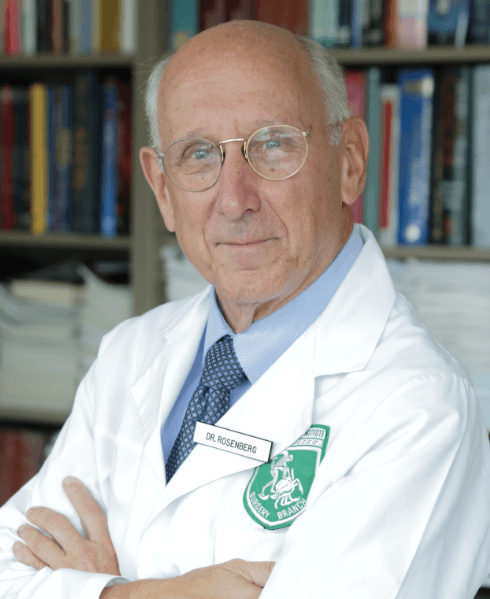
Dr. Steven Rosenberg

Like many young boys, IRP senior investigator Steven A. Rosenberg, M.D., Ph.D., initially believed he would grow up to become a cowboy, a dream he shared with his older brother, Jerry. That plan changed after World War II ended and stories began coming out of Europe about members of his family who had perished in concentration camps.

“I just became so upset about the evil that people could perpetrate on one another,” he recalls. “Right then and there, I knew I wanted to do the opposite. I wanted to do things that would help people, and I developed almost a spiritual desire to become a doctor.”

He ultimately did become a doctor, and his pioneering research into how cancer interacts with the immune system has led to treatments that are reducing suffering for many people with cancer. In recognition of this groundbreaking work, Dr. Rosenberg was awarded the HHS Secretary’s Award for Distinguished Service in August 2021. The highest honor given by the US Department of Health and Human Services (HHS), the award celebrates excellence in leadership, ability, and service.

Research Symposium Celebrates Graduate Student Science

Event Spotlights Students Completing Their Ph.D. Research in IRP Labs

NIH graduate student John Fenimore

The NIH provides an extraordinarily rich environment for learning and honing the skills needed to pursue a scientific career. It’s no wonder, then, that Ph.D. students from institutions all across the United States and the rest of the world come here to conduct their dissertation research under the mentorship of the IRP’s many renowned investigators.

Nearly 150 of those students presented the fruits of their scientific work at the NIH’s 16th annual Graduate Student Research Symposium on Thursday, February 20. The insights they have produced on topics from cancer to autoimmune disease to environmental contaminants were supremely impressive and will likely contribute to important improvements in medical care in the future. For anyone who missed this exciting event, read on to learn about a few of the many research projects that were on display.