
astrocytes

IRP Scientist Shares Path From Stuttering to Science

Diversity-Focused NIH Program Helps Dr. Shahriar SheikhBahaei Investigate the Neuroscience of Voluntary Movement
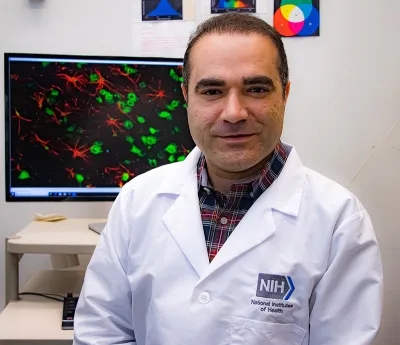
Dr. Shahriar SheikhBahaei

IRP neuroscientist Shahriar SheikhBahaei, Ph.D., first became aware of his stutter when he was 5 years old. Years later, his career would revolve around studying the biological roots of his speech impediment. But before he could start his own lab focused on how the brain controls voluntary movement, he needed a leg up from NIH’s Independent Research Scholars (IRS) program.

Star-Shaped Brain Cells May Contribute to Marijuana Addiction

astrocytes

The recent spate of state laws legalizing marijuana for medical or recreational purposes has prompted concerns that increased marijuana use will boost the number of people who become dependent on and abuse the drug, a condition known as cannabis use disorder (CUD). Treating the growing number of patients with CUD will require a greater understanding of how chronic marijuana use can lead to addiction. New IRP research has revealed that star-shaped brain cells called astrocytes may play a role in the pleasurable effects of marijuana and contribute to the drug’s addictive properties.