
regenerative medicine

Three-Minute Talks: A Succinct Showcase of Science

Annual Competition Tests Researchers’ Communication Skills

alarm clock

Everyone recognizes that science can’t just stay in the lab — it can only do good if it finds applications out in the wider world, whether that’s in the form of new technologies, new medical treatments, or a change in public policy. However, the importance of getting scientists out of the lab to engage with the public has been emphasized much less until recently. One of NIH’s approaches to solving that problem is its annual Three-Minute Talks (TmT) competition, which encourages NIH postbaccalaureate fellows, graduate students, and postdoctoral fellows to figure out a way to succinctly explain their research to people who may know nothing at all about what they do.
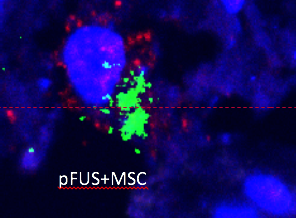
Ultrasound-Based Technique Produces Fertile Ground for Therapeutic Stem Cells

Mesencyhmal stromal cells (MSCs) releasing a therapeutic molecule called interleukin-10 (green) in a section of kidney tissue

Every good gardener knows the importance of fertilizing the soil before planting seeds, and evidence is accumulating that a similar concept applies to the human body when it comes to experimental stem cell therapies. A new IRP study has uncovered how a medical technology called pulsed-focused ultrasound boosts the healing potency of a particular stem cell treatment.

A New Cures Act, a New Research Beginning

Janus, the Roman god of transitions

Many cultures through history marked the new year in the spring, at the vernal equinox in March when the daytime and nighttime at the equator are equal lengths, 12 hours each. That certainly makes sense: Spring is a time of renewal, as the earth is giving birth to new crops. And I'm surely in the mood for some renewal. One of the most exciting things I have to report is the 21st Century Cures Act, which was signed into law on December 14, 2016.