IRP Study Finds Brain Imaging Technique Could Aid Clinical Trials
We all crave instant gratification, but unfortunately, most things worth doing take time. This certainly applies to evaluating treatments for many illnesses, as observable changes in patients’ symptoms can take weeks or months to appear. Fortunately, new NIH research has revealed that a particular way of non-invasively peering into the brain could help accelerate the development of treatments for a variety of rare neurological diseases.
No single event captures the incredible breadth of research going on in the IRP as effectively as the annual NIH Research Festival. In fact, the event is so jam-packed that it typically stretches over multiple days, running this year from September 23-25. The first day of the 2024 Research Festival kicked off with a poster session where scientists from all across NIH showcased the cutting-edge science they have been working on, demonstrating research on subjects like how cooking affects the brain, vaping’s impact on lung health, 3D models for studying pregnancy complications, and much more. Read on to dive deeper into a few of the more than 400 research projects presented at this celebration of IRP science.
IRP Study Could Lead to New Treatments for an Increasingly Prevalent Liver Ailment
Experienced bakers know certain ingredients are impossible to work with when they’re not supple enough — just try making cookies with ice-cold butter or rock-hard brown sugar. The same could be said of the liver, which struggles to do its job when high levels of fat accumulate in it and trigger a process that binds the liver up in an inflexible mesh. Recent IRP research has identified a key set of biochemical events responsible for that ailment, pointing the way towards a possible method of treating an increasingly prevalent cause of liver disease.
New Approach Preserves Cognitive Abilities in Pre-Symptomatic Mice
Cooks preparing traditional holiday feasts will surely find that a fire extinguisher can effectively quench an oven inferno, but it would probably be better if the oven never caught fire in the first place. Similarly, Alzheimer’s researchers have focused much more on putting out the biological fires scorching patients’ brains than on making brain cells ‘fireproof.’ A new IRP study in mice, however, suggests better results might be achieved with an approach specifically designed to make patients’ neurons more resilient.
IRP Research Points to New Tool for Alleviating Genetic Disorders
With all the dangerous viruses out there, from the seasonal flu to the novel coronavirus that causes COVID-19, people understandably want to make sure their immune systems are topped-up with disease-fighting antibodies that block viral invaders. However, when it comes to the viruses scientists are modifying to deliver gene therapy, having a robust immune response is actually an obstacle to getting healthy. In a new study, IRP researchers showed that most people’s immune systems don’t react to a particular harmless virus that can effectively deliver new genes to the liver and heart, making it a promising delivery vehicle for therapies designed to alleviate a life-threatening genetic condition.
IRP Researchers Engage and Educate at Competition Finals
English is generally considered the ‘international language of science,’ since nearly all scientific papers are published in English. Yet, even to a native English speaker, scientists seem to be using another language entirely to talk about their research. Most Americans, after all, don’t know an ‘autophagosome’ from a ‘lysosome’ and would be hard-pressed to explain the difference between an ‘oocyst’ and a ’sporozoite.’
Fortunately, efforts like NIH’s annual Three-Minute Talks (TmT) competition are helping scientists learn how to communicate about their research in a manner that is much easier to understand. On June 30, after months spent whittling down dozens of competitors from across the IRP, 10 finalists raced against the clock to explain their work and its importance in a clear and compelling way.
Women Scientists Advisors Select Three Young Researchers for Recognition
While women have now overtaken men in terms of admission and enrollment in undergraduate education, they remain underrepresented in the sciences. This includes at NIH, where 74 percent of senior investigators and 54 percent of tenure-track investigators are male, according to the most recent statistics available. Consequently, NIH is putting considerable effort into supporting women scientists at all stages of their careers.
One NIH entity dedicated to this important work is the NIH Women Scientists Advisors (WSA), a group of women elected to represent the interests of women scientists in the IRP. Among its many initiatives, each year the WSA chooses several female postdoctoral fellows or graduate students in the IRP to receive the WSA Scholar Award in recognition of their outstanding scientific achievements. The awardees present their research at the annual WSA Scholars Symposium, which this year was held on April 25 and recognized young women leading efforts to better understand how disease-related genes evolved, an investigation of how a fatty liver can give rise to liver cancer, and the evaluation of a way to deliver gene therapy for a rare genetic disease. Read on to learn more about this year’s WSA Scholars and the impressive discoveries they have made during their time in the IRP.
IRP Researchers Aim to Regenerate Damaged Salivary Glands
It’s easy to take our saliva for granted. Most people have so much of it that they think nothing of spitting it out into a trash can when they finish chewing a stick of gum. Perhaps only people who have lived without it truly understand the great gift that is a perpetually moist mouth.
“Persistent dry mouth causes lots of problems with quality of life, and people forget how important saliva is until they lose it,” says IRP senior investigator Matthew Hoffman, B.D.S., Ph.D.
In honor of World Oral Health Day on March 20, a celebration of scientific efforts to reduce the burden of oral disease, I talked with Dr. Hoffman about his lab’s efforts to understand the biology of salivary gland dysfunction and translate that knowledge into treatments that bring relief to the many people suffering from it.
World-Renowned Geneticist Discusses His Experience Leading NIH
Francis S. Collins, who is stepping down from his post as NIH Director by the end of the year, spoke recently with staff from The NIH Catalyst, the NIH Record, and the “I am Intramural” Blog. Read on for a few highlights from that conversation, or read the full interview originally published The NIH Catalyst.
On NIH’s efforts to improve diversity in the scientific workforce
“Diversity is a hugely important issue for our workforce, our grantee community, and our clinical-trials participation. Several years ago I put together a diversity working group of my advisory committee, and out of that came the creation of a new position, the Chief Officer for Scientific Workforce Diversity. The initial holder of that post was Dr. Hannah Valantine, and now Dr. Marie Bernard leads the office. In addition, we have made real strides in increasing diversity in our intramural program through the Distinguished Scholars Program.
Groundbreaking Immunotherapy Research Revolutionizes Cancer Treatment
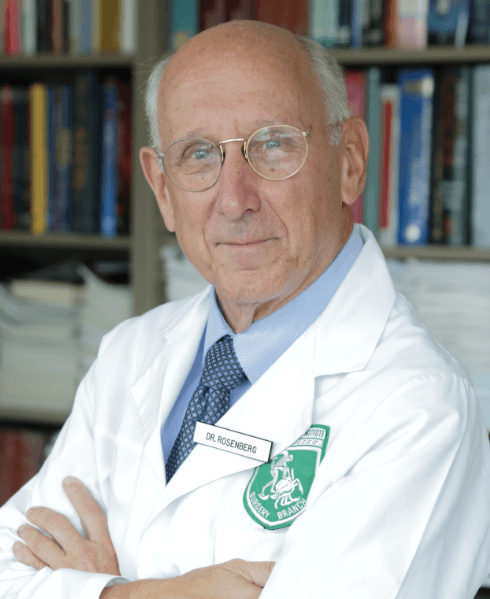
Like many young boys, IRP senior investigator Steven A. Rosenberg, M.D., Ph.D., initially believed he would grow up to become a cowboy, a dream he shared with his older brother, Jerry. That plan changed after World War II ended and stories began coming out of Europe about members of his family who had perished in concentration camps.
“I just became so upset about the evil that people could perpetrate on one another,” he recalls. “Right then and there, I knew I wanted to do the opposite. I wanted to do things that would help people, and I developed almost a spiritual desire to become a doctor.”
He ultimately did become a doctor, and his pioneering research into how cancer interacts with the immune system has led to treatments that are reducing suffering for many people with cancer. In recognition of this groundbreaking work, Dr. Rosenberg was awarded the HHS Secretary’s Award for Distinguished Service in August 2021. The highest honor given by the US Department of Health and Human Services (HHS), the award celebrates excellence in leadership, ability, and service.