
Research Topics
Signaling and Secretion in Neuroendocrine Cells
The Section was established in 1993 to investigate the cellular signaling, gene expression, and secretory processes that regulate hypothalamic and pituitary cells, with particular emphasis on the interplay between electrical activity at the plasma membrane and receptor-mediated signaling pathways. Our research focuses on how neuroendocrine cells use ion channels and G protein-coupled receptors (GPCRs) as signaling platforms to integrate and efficiently process information. To address these questions, we characterize both native and recombinant receptors and ion channels expressed in neuroendocrine cells. Our earlier work focused on the role of inositol trisphosphate receptors in oscillatory calcium release and influx, the mechanisms underlying their periodic activation, and the complex coordination between calcium release from intracellular stores and cellular electrical activity. We also characterized voltage-gated ion channels in neuroendocrine cells, including cell-type-specific patterns of electrical activity and the channels that generate them, the physiological significance of these activity patterns, and the reciprocal regulation between GPCRs and ion channels. More recently, we have investigated ligand-gated receptor channels expressed in pituitary cells, including ATP-gated P2X receptors. Our current research examines age-, sex-, and tissue-specific mechanisms of pituitary signaling, transcription, and secretion; the heterogeneity of pituitary secretory cells arising from their distinct postnatal developmental histories; and cell-type-specific pathways of exocytosis. Ongoing and planned studies also employ conditional knockout mouse models to define the physiological roles of specific signaling components in vivo. Findings from these projects, together with results from related studies, have revealed the remarkable complexity of intracellular signaling networks in the pituitary and their critical physiological importance. These discoveries underscore the need for continued investigation of the mechanisms that regulate neuroendocrine cell function. The knowledge generated by our current and planned research is expected to advance understanding of pituitary and neuroendocrine physiology and to provide valuable insights for researchers and clinicians in the neuroendocrine field, as well as for the broader scientific community.
Biography
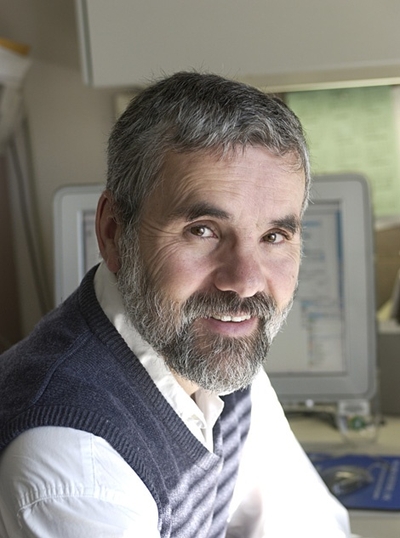
Dr. Stanko Stojilkovic received a Ph.D. in Physiology and Neuroendocrinology from the University of Novi Sad, Serbia, in 1982. He was Assistant Professor of Physiology at the Faculty of Sciences, University of Novi Sad, before joining NICHD as a Guest Researcher in 1985, where he worked in the laboratory of Dr. Kevin J. Catt. Dr. Stojilkovic became an Investigator in 1993, leading the Section on Cellular Signaling, and then Senior Investigator in 1998, both within the Endocrinology and Reproduction Research Branch of NICHD. His work has earned the group recognition, which is reflected in 300 publications, including several review articles and chapters in university textbooks, and approximately 100 seminar and conference invitations. Dr. Stojilkovic is member of the Endocrine Society, American Society for Biochemistry and Molecular Biology, American Neuroendocrine Society, and Society for Neuroscience. He has also been inducted into the Serbian Academy of Sciences and Arts (2003) and has received a Doctor Honoris Causa (2010) from the University of Novi Sad. He is/was on Editorial Boards of several journals and acts as an Associate Editor for Frontiers in Endocrinology.
Selected Publications
- Constantin S, Nessa N, Stojilkovic SS. PI4-kinase A is essential for survival of the GnRH neurons. Front Endocrinol (Lausanne). 2026;17:1813498.
- Constantin S, Sokanovic SJ, Mochimaru Y, Dams AL, Smiljanic K, Prévide RM, Nessa N, Carmona GN, Stojilkovic SS. Protein Tyrosine Phosphatase Receptors N and N2 Control Pituitary Melanotroph Development and POMC Expression. Endocrinology. 2024;165(8).
- Fletcher PA, Smiljanic K, Prévide RM, Constantin S, Sherman AS, Coon SL, Stojilkovic SS. The astroglial and stem cell functions of adult rat folliculostellate cells. Glia. 2023;71(2):205-228.
- Sokanovic SJ, Constantin S, Lamarca Dams A, Mochimaru Y, Smiljanic K, Bjelobaba I, Prévide RM, Stojilkovic SS. Common and female-specific roles of protein tyrosine phosphatase receptors N and N2 in mice reproduction. Sci Rep. 2023;13(1):355.
- Constantin S, Sokanovic SJ, Mochimaru Y, Smiljanic K, Sivcev S, Prévide RM, Wray S, Balla T, Stojilkovic SS. Postnatal Development and Maintenance of Functional Pituitary Gonadotrophs Is Dependent on PI4-Kinase A. Endocrinology. 2023;164(12).
Related Scientific Focus Areas
Molecular Biology and Biochemistry
View additional Principal Investigators in Molecular Biology and Biochemistry
This page was last updated on Friday, September 18, 2026