
Research Topics
Immunotherapy, Immune Toxicity, and the Biology of Thymic Epithelial Tumors
Dr. Rajan leads a clinical and translational research program devoted primarily to improving the treatment and understanding of thymic epithelial tumors (TETs), including thymoma and thymic carcinoma. These rare thoracic cancers present an unusual therapeutic challenge: patients with recurrent disease have relatively few effective systemic treatment options, while the central role of the thymus in establishing immune tolerance makes thymic tumors particularly prone to paraneoplastic autoimmunity and immune-related complications. Dr. Rajan’s program addresses this challenge through an integrated strategy combining clinical drug development, mechanistic studies of immune toxicity, investigation of thymoma-associated autoimmunity and immunodeficiency, and increasingly detailed characterization of tumor–immune interactions.
Developing safer immunotherapy for thymic cancers
A foundational contribution of Dr. Rajan’s program has been the clinical development of immune checkpoint inhibition for TETs. In an early study of the anti-PD-L1 antibody avelumab, four of seven patients with thymoma experienced an objective response, demonstrating that these tumors can be highly immunologically responsive. Clinical benefit, however, was accompanied by substantial muscle-directed immune toxicity. Translational studies subsequently revealed a strong association between detectable pretreatment acetylcholine receptor (AChR)-binding autoantibodies and development of immune myositis. Incorporating AChR antibody screening into patient selection has helped reduce muscle toxicity and improve the feasibility of checkpoint inhibition in carefully selected patients.
Dr. Rajan’s group has subsequently pursued the biology of this toxicity in collaboration with investigators at the National Institute of Arthritis and Musculoskeletal and Skin Diseases. Transcriptomic profiling has identified a distinctive subtype of immune checkpoint inhibitor-induced myositis in TET patients, characterized by dense T-cell and macrophage infiltration and activation of IL-6 and type 2 interferon signaling. These observations point toward mechanism-based interventions such as IL-6 or JAK-STAT pathway inhibition and support a broader goal of replacing prolonged nonspecific corticosteroid treatment, where possible, with targeted immunomodulation.
Expanding immunotherapy beyond checkpoint inhibition
Because response rates to checkpoint inhibitor monotherapy in recurrent TETs are generally below 25% and toxicity remains an important limitation, Dr. Rajan’s program is expanding the therapeutic repertoire to immunomodulatory strategies that do not depend solely on PD-(L)1 blockade.
One major effort is a phase II trial of PT-112, an inhibitor of ribosomal biogenesis that induces immunogenic cell death. Preliminary results described in 2025 showed durable disease control in a subset of patients with thymoma. Immune-correlative studies demonstrated increases in activated CD4+ T cells, proliferating CD8+ T cells and natural killer cells, increased IFN-γ and TNF-α, reduced circulating VEGF and TGF-β1, and increased immune-cell density in paired tumor biopsies. The findings support continued development of PT-112, particularly in thymoma, as well as investigation of rational immunotherapy combinations.
A complementary strategy targets the immunosuppressive TGF-β pathway. Dr. Rajan is leading a phase II study of bintrafusp alfa (M7824), a bifunctional molecule combining PD-L1 blockade with a TGF-β trap. The study builds on his earlier work in non-small cell lung cancer showing treatment-associated remodeling of the tumor immune microenvironment and on evidence of elevated TGF-β in advanced TETs.
The program is also moving toward additional immune platforms. Dr. Rajan is developing a trial of invikafusp alfa (STAR0602), a bifunctional molecule designed to selectively activate and expand Vβ6/Vβ10-expressing T-cell subsets, for recurrent thymic carcinoma. In parallel, collaboration within the Thoracic and GI Malignancies Branch is extending earlier work on mesothelin expression and mesothelin-directed therapeutics toward hYP218 CAR-T-cell therapy for mesothelin-expressing thymic carcinoma.
Understanding autoimmunity and immunodeficiency associated with thymoma
A second major axis of the program investigates the immune dysregulation intrinsic to thymic tumors. These studies seek to understand why thymoma can simultaneously produce autoimmunity and impaired host defense and to translate those mechanistic observations into treatment.
Collaborative work with investigators in the National Institute of Allergy and Infectious Diseases (NIAID) identified a previously unrecognized lymphocyte-predominant autoimmune pneumonitis associated with thymoma. Building on characterization of the inflammatory infiltrate and circulating antibodies, the investigators developed a clinically active T- and B-cell-directed therapeutic regimen using azathioprine and rituximab.
Related work has defined a mechanism of acquired immunodeficiency in thymoma. In patients with severe infections and anti-IL-12 antibodies, Dr. Rajan and collaborators identified neutralizing antibodies against IL-23; the potency of IL-23 neutralization correlated with infection severity. In a validation cohort of patients with thymoma, anti-IL-23 antibodies were strongly associated with opportunistic infections. The findings establish a mechanistic link between thymoma-associated anti-cytokine autoantibodies and persistent infectious susceptibility and may eventually inform targeted therapeutic strategies.
The broader immune-toxicity portfolio includes studies of rheumatic complications, sialadenitis, bone marrow dyscrasias, and other organ-specific immune manifestations. A unifying objective is to define the cellular and molecular drivers of these syndromes and develop targeted, steroid-sparing treatments that control pathologic immunity without suppressing antitumor immune responses.
Enabling research through natural history studies and quantitative technologies
Underlying much of this research is Dr. Rajan’s Natural History Study of thoracic malignancies, which provides longitudinally annotated tissue and blood specimens for genomic, proteomic, immunological, and other translational studies. These resources have enabled collaborations extending beyond immunotherapy. Examples include epigenomic profiling of cancer from plasma, spatial studies of the lung tumor microbiome, and development of deep-learning methods to predict treatment response from histopathology. Dr. Rajan has also contributed to improved response assessment for TETs through modified RECIST criteria, volumetric measurements, and deep-learning approaches to tumor-volume quantification.
Overall direction and impact
The central theme of Dr. Rajan’s research is the use of thymic epithelial tumors as both a therapeutic challenge and a model of the relationship between cancer and immune tolerance. His program integrates bedside observations with mechanistic immunology: clinical responses and toxicities generate biological questions; biospecimens and collaborative laboratory studies identify mechanisms and biomarkers; and those findings are returned to the clinic through patient selection, toxicity-mitigation strategies, and new therapeutic approaches.
Biography
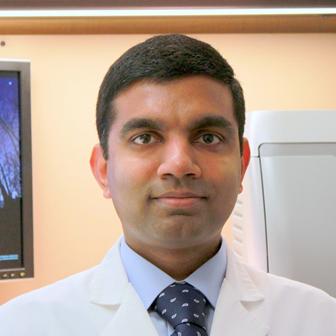
Dr. Rajan is a Senior Clinician and thoracic medical oncologist in the Center for Cancer Research (CCR) at the National Cancer Institute (NCI), National Institutes of Health. He is Director of the CCR Medical Oncology Service, Clinical Director of the Thoracic and GI Malignancies Branch, and Head of the Thymic Malignancies Section. A physician-scientist specializing in thoracic cancers, Dr. Rajan has built a clinical and translational research program focused on thymic epithelial tumors (TETs), including thymoma and thymic carcinoma—rare cancers distinguished by complex interactions between tumor biology, immune tolerance, autoimmunity, and immunodeficiency.
In addition to his clinical and research responsibilities, Dr. Rajan holds leadership and scientific service roles at the NCI and in the broader oncology community. He has served as Director of the CCR Medical Oncology Service since 2023 and Co-Chair of the CCR Scientific Review Committee since 2024. His current and previous appointments include membership of the NCI Hematology/Oncology Fellowship Clinical Competency Committee, Veterans Affairs Lung Precision Oncology Program Scientific Review Committee, International Thymic Malignancy Interest Group (ITMIG) Virtual Tumor Board, FDA Oncologic Drugs Advisory Committee, NIH General Medicine Institutional Review Board, and the authoring committee for the fifth edition of the WHO Classification of Thoracic Tumors.
His contributions to patient care, research, education, and collaborative science have been recognized with numerous honors, including the 2024 NIH Director’s Award for Scientific/Medical–Clinical Care, the 2022 NIH Hematology/Oncology Fellowship Teaching Attending of the Year Award, multiple CCR Federal Technology Transfer Awards, the 2020 Society for Immunotherapy of Cancer Team Science Award, the 2016 ITMIG Barbara Neibauer Award, and a 2016 CCR Group Award for the development of Avelumab, a PD-L1-directed immune checkpoint inhibitor.
Dr. Rajan received his M.B.B.S. and M.D. in Internal Medicine from the University of Delhi. He subsequently completed residency training in Internal Medicine and fellowship training in Hematology/Oncology at SUNY Upstate Medical University, followed by specialized training in Thoracic Oncology at the National Cancer Institute.
Selected Publications
- Thomas A, Mena E, Kurdziel K, Venzon D, Khozin S, Berman AW, Choyke P, Szabo E, Rajan A, Giaccone G. 18F-fluorodeoxyglucose positron emission tomography in the management of patients with thymic epithelial tumors. Clin Cancer Res. 2013;19(6):1487-93.
- Rajan A, Carter CA, Kelly RJ, Gutierrez M, Kummar S, Szabo E, Yancey MA, Ji J, Mannargudi B, Woo S, Spencer S, Figg WD, Giaccone G. A phase I combination study of olaparib with cisplatin and gemcitabine in adults with solid tumors. Clin Cancer Res. 2012;18(8):2344-51.
- Force J, Rajan A, Dombi E, Steinberg SM, Giaccone G. Assessment of objective responses using volumetric evaluation in advanced thymic malignancies and metastatic non-small cell lung cancer. J Thorac Oncol. 2011;6(7):1267-73.
- Rajan A, Giaccone G. Treatment of advanced thymoma and thymic carcinoma. Curr Treat Options Oncol. 2008;9(4-6):277-87.
Related Scientific Focus Areas

This page was last updated on Saturday, October 10, 2026