
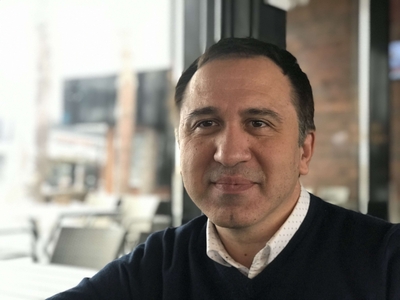
Amiran K. Dzutsev, M.D., Ph.D.
Stadtman Investigator
Laboratory of Integrative Cancer Immunology
NCI/CCR
Research Topics
Immunotherapy for cancer has been hailed as one of the most significant advances in cancer therapy field in recent decades. It has led to significant advancements in the treatment of various cancers, offering hope to patients who previously faced limited therapeutic options. From immune checkpoint inhibitors to CAR-T cell therapies and cancer vaccines, immunotherapy has ushered in a new era of personalized and effective treatments, fundamentally changing the landscape of oncology and offering the potential for long-lasting, durable responses in many cancer patients. Ultimately, the goal of our laboratory is to improve or design new immunotherapy strategies by leveraging insights obtained through various system perturbations, including ones involving the microbiome.
The microbiome has emerged as a significant player in the complex landscape of cancer research, particularly in its role in cancer immunotherapy. This diverse selection of bacteria, viruses, fungi, and other microorganisms residing primarily in the gut but also found in various tissues, including tumors, plays a pivotal role in modulating the risk, development, and progression of cancer. Our research focuses on how the composition and activity of the microbiota can influence cancer susceptibility and outcomes.
One of the key areas of interest lies in understanding how the microbiome impacts the immune system's function, as it is a critical component in the body's defense against cancer cells. Furthermore, specific microbes have been linked to the production of metabolites that can either promote or inhibit tumor growth. We explore how we can leverage this knowledge to develop novel cancer prevention and treatment strategies, such as microbiome-based therapies and personalized interventions to manipulate the microbiota in ways that benefit cancer patients.
As our understanding of the intricate interplay between the microbiome and cancer deepens, it holds great promise for revolutionizing our approach to cancer prevention, treatment and early detection. Harnessing the power of the microbiome may open new avenues for improving the efficacy and precision of cancer therapies, ultimately offering hope for better outcomes and enhanced quality of life for cancer patients.
Biography
Dr. Dzutsev received his M.D. from North-Ossetian Medical Academy, Vladikavkaz, Russia and his Ph.D. from the Institute of Immunology, Moscow, Russia, where he studied thymic selection under the supervision of Alexander Yarilin. Following his doctoral studies, he pursued postdoctoral training in Jay Berzofsky's laboratory at the NCI, where he conducted research in mucosal immunology. Subsequently, in 2010, he transitioned to the role of staff scientist in the laboratory of Giorgio Trinchieri. In 2023, he became an NCI Stadtman Tenure-Track Investigator.
Selected Publications
- Cvijetic G, Ottaviani V, Conway IO, Jabari E, Mitrovic M, Wang H, Rodrigues PF, du Halgouet A, Zhao S, Wang HC, Chandroth AP, Palmer RJ Jr, Ansaldo E, Doyle AD, Martin D, Szabo R, Corsino C, Pala F, Fernandes MR, Bouladoux N, Young HA, Zheng Y, Liu Z, Ginhoux F, Dang EV, Darnell S, Liechti G, Lionakis MS, Ivanek R, Notarangelo LD, Belkaid Y, Chen W, Dzutsev A, Trinchieri G, Tussiwand R. Dysbiosis-induced expansion of AXL-positive inflammatory type 3 dendritic cells triggers preclinical autoimmunity. Nat Immunol. 2026;27(9):1856-1873.
- Dzutsev AK, Trinchieri G. A New Dimension in Tumor Heterogeneity: Intratumoral Bacteria Impact Multifocal Hepatocellular Carcinoma Development. Cancer Discov. 2025;15(8):1540-1542.
- Dzutsev AK, Goldszmid RS. Towards enhancing the predictive value of the microbiota for cancer immunotherapy. Trends Cancer. 2024;10(9):771-773.
- Newman NK, Macovsky MS, Rodrigues RR, Bruce AM, Pederson JW, Padiadpu J, Shan J, Williams J, Patil SS, Dzutsev AK, Shulzhenko N, Trinchieri G, Brown K, Morgun A. Transkingdom Network Analysis (TkNA): a systems framework for inferring causal factors underlying host-microbiota and other multi-omic interactions. Nat Protoc. 2024;19(6):1750-1778.
Related Scientific Focus Areas
Microbiology and Infectious Diseases
View additional Principal Investigators in Microbiology and Infectious Diseases
This page was last updated on Monday, February 9, 2026