
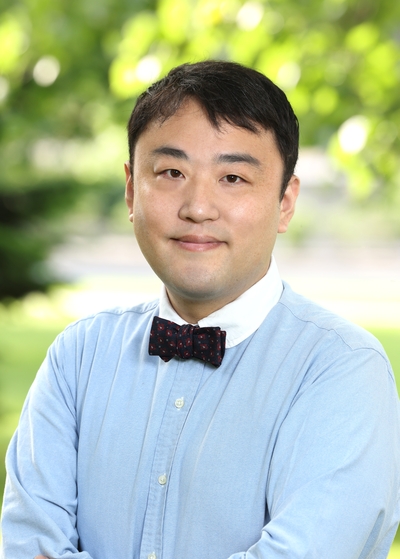
Norihiro Yamaguchi, M.D., Ph.D.
Assistant Clinical Investigator
Laboratory of Cancer Biology and Genetics
NCI/CCR
Research Topics
Transforming Tumor Microbiota Research from Association to Causation
Tumor-associated bacteria have emerged as an important component of the tumor microenvironment. Despite growing appreciation of their association with cancer progression, establishing causal mechanisms remains due to the requirements for viable microorganisms that can be isolated, cultured, and experimentally manipulated.
Our laboratory develops experimental platforms to identify targetable cancer-promoting bacteria and to translate these discoveries into bacteria-derived, bacteria-free therapeutics for cancers.
Platform Innovations
Evolution-Guided Microbial Selection
The framework we call “Evolution-Guided Microbial Selection” is the conceptual foundation of our laboratory.
Rather than beginning with sequencing-based associations, we harness tumor evolution itself as a biological selection system. Using physiologically relevant orthotopic mouse models, we allow metastatic progression to naturally select microorganisms that successfully adapt to and persist within the tumor microenvironment. We then recover these evolutionarily selected bacteria through culturomics, enabling functional validation, mechanistic interrogation, and therapeutic discovery.
This integrated platform establishes a causal framework for tumor microbiota research by enabling the discovery of microorganisms that are not merely associated with cancer progression, but are functionally selected by the metastatic niche and capable of driving cancer evolution.
Human Gut Commensal Avatar Mouse Models
To faithfully model human host–microbial interactions, we are establishing human gut commensal avatar m models by colonizing germ-free mice with curated, culture-defined human gut microbial communities. This platform enables mechanistic investigation of defined bacterial communities while preserving the complexity of the human gut microbiota under experimentally controlled conditions.
Biological Discovery
Using these experimental platforms, our laboratory addresses three fundamental questions.
1. Which bacteria causally regulate cancer progression?
We identify bacterial species that are functionally selected through tumor evolution and determine their causal roles in metastatic colonization and other aspects of cancer progression.
2. How do bacterial molecules remodel the tumor microenvironment?
We define the molecular mechanisms through which bacterial molecules interact with host tissues to regulate cancer progression, reshape the metastatic niche, and influence tumor evolution.
3. Can bacterial molecules become cancer therapeutics?
Our long-term vision is to establish a new therapeutic paradigm in oncology by developing bacteria-derived, bacteria-free therapeutics that selectively target the non-self, microbial compartment of the tumor microenvironment.
Biography
Norihiro Yamaguchi, M.D., Ph.D., M.P.H. is a Physician-Scientist Early Investigator in the Laboratory of Cancer Biology and Genetics at the Center for Cancer Research, National Cancer Institute, National Institutes of Health. He is a physician-scientist and board-certified medical oncologist whose research integrates cancer biology, microbiology, and translational therapeutics to uncover novel mechanisms of metastatic progression and develop innovative cancer therapies.
Dr. Yamaguchi received his M.D. from Osaka Metropolitan University, an M.P.H. in Clinical Effectiveness from the Harvard T.H. Chan School of Public Health, and a Ph.D. in Systems Cancer Biology from The Rockefeller University, where he trained under Dr. Sohail Tavazoie as a Grossman Scholar. His research has identified targetable mechanisms of gastrointestinal cancer metastasis, resulting in multiple patents, therapeutic development programs, and publications in leading biomedical journals. In 2025, he received a U.S. Department of Defense Peer Reviewed Cancer Research Program Career Development Award in support of his research.
He established his independent laboratory at the National Cancer Institute to develop evolution-guided microbial selection and other experimental platforms that enable the causal discovery of targetable cancer-promoting bacteria, with the long-term goal of pioneering bacteria-derived, bacteria-free therapeutics that selectively target the non-self compartment of the tumor microenvironment.
Related Scientific Focus Areas

This page was last updated on Wednesday, October 14, 2026